Carillon
A tower of bronze bells played from a keyboard of wooden batons and pedals.
A cabinet of strange instruments
Rare, curious, and occasionally rumoured to drive their players mad, sorted by the five elements of physics-based organology

Gaiaphones · solid things, struck or stroked
A tower of bronze bells played from a keyboard of wooden batons and pedals.
Glass rods stroked with wet fingers; the vibration travels into metal and out through cones of metal and fibreglass.
the glass harmonica, or armonica
The instrument's popularity did not last far beyond the 18th century. Some claim this was due to strange rumors that using the instrument caused both musicians and their listeners to go mad.
The harmonica excessively stimulates the nerves, plunges the player into a nagging depression and hence into a dark and melancholy mood that is apt method for slow self-annihilation. If you are suffering from any kind of nervous disorder, you should not play it; if you are not yet ill you should not play it; if you are feeling melancholy you should not play it. Friedrich Rochlitz, Allgemeine musikalische Zeitung
The glass harmonica is also used for Spock's theme on the soundtrack of the 1991 film Star Trek VI: The Undiscovered Country, composed by Cliff Eidelman.
A modern version of the "purported dangers" claims that players suffered lead poisoning because armonicas were made of lead glass. However, there is no known scientific basis for the theory that merely touching lead glass can cause lead poisoning. Furthermore, historical replicas by Eisch use so-called 'White Crystal' replacing the lead with a higher potash content, many modern devices, such as those made by Finkenbeiner, are made from pure silica glass.
The somewhat disorienting quality of the ethereal sound is due in part to the way that humans perceive and locate ranges of sounds. Above 4,000 Hertz we primarily use the volume of the sound to differentiate between each ear (left and right) and thus triangulate, or locate, the source. Below 1,000 Hertz we use the 'phase differences' of sound waves arriving at our ears to identify left and right for location. The predominant timbre of the armonica is in the range of 1,000–4,000 hertz, which coincides with the sound range where the brain is 'not quite sure' and thus we have difficulty locating it in space (where it comes from), and referencing the source of the sound (the materials and techniques used to produce it).
"Galileo, Galilei". Passage from Two New Sciences by Galileo about the 'wet finger around the wine glass' phenomenon (1638). Archived from the original on February 10, 2007. Retrieved January 16, 2007.
Hydraulophones · sound from liquid
The hydraulophone sounds similar to a glass armonica but has a darker, heavier sound, that extends down into the subsonic range.
Hydraulophone embouchure:
Embouchure is controlled by way of the instrument's mouths, not the player's mouth such that the player can sing along with the hydraulophone (i.e. a player can sing and play the instrument at the same time). Moreover, the instrument provides the unique capability of polyphonic embouchure, where a player can dynamically "sculpt" each note by the shape and position of each finger inserted into each of the mouths. For example, the sound is different when fingering the center of a water jet than when fingering the water jet near the periphery of the circular mouth's opening.
water, or air? undetermined
The bubble organ is a musical instrument built by Aaron Wendel, and is made out of pieces of old furniture, wood and rain gutters collected from the alleys and dumpsters around his apartment.
Aerophones · the Nautiluphone contenders
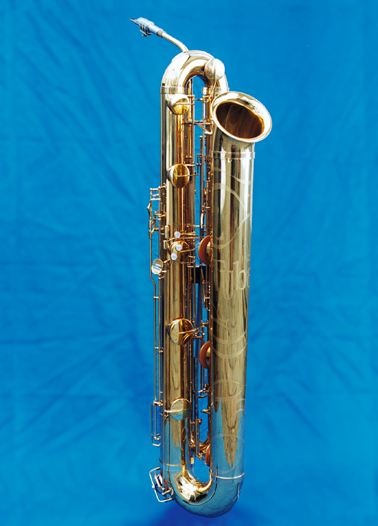
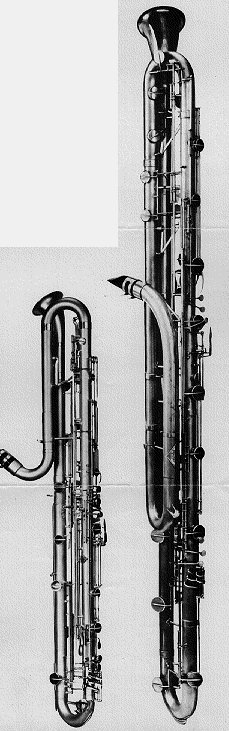
contenders
The low reeds were shortlisted for a nautilus who finds the saxophone's fingering cumbersome. She is now designing her own.
Plasmaphones · sound from lightning
Played by modulating the spark: the arc itself is the loudspeaker.
Quintephones · electrophones and beyond
Since 2008, Jean-Loup Dierstein, with the support of Maurice Martenot's son, has been developing a new, officially named ondes Martenot instrument based on the model used when production stopped in 1988.